Keynote Speakers
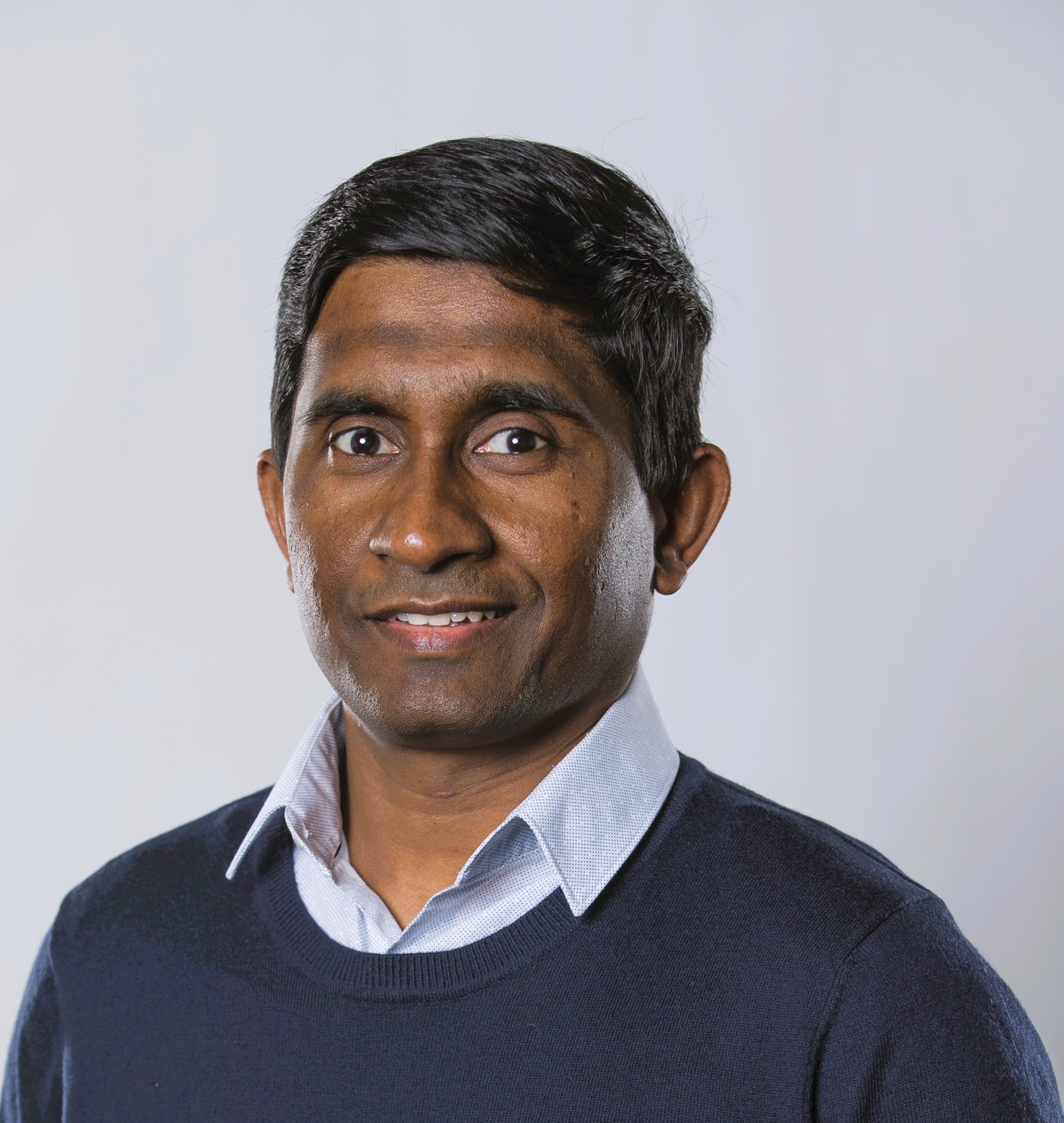
Biography
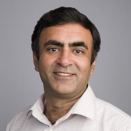
Dr. Naqi Sayed joined Lakehead University in August 2002 with an appointment to the Accounting Discipline in the Faculty of Business Administration. He holds a Masters of Business Administration from Pakistan and a Masters in Banking Management from the United Kingdom. He has gained extensive working experience in non-banking financial institutions and commercial banks in the area of small business and corporate finance. Prior to joining Lakehead University, Naqi taught Accounting and Management Accounting in Australia while working for his PhD in Accounting and Finance. Naqi received his Certified Management Accountant designation in Ontario, Canada in 2009. His teaching interests include management accounting, performance management and strategy. His management accounting publications and research interests include performance management, Balanced Scorecard and multi-criteria decision models. He has also published in the area of equity finance (especially venture capital), resource-based theory and accounting education.Keynote Title: Business in Artificial Intelligence
Dr. Micheal Beck
Associate Professor, Department of Applied Computer Science at the University of Winnipeg, Winniepeg, Canada
Biography
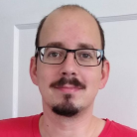
Michael Beck (Dr. rer. nat.) is an Assistant Professor (soon to be Associate Professor) at the University of Winnipeg. Originally a graduate in mathematics, he started his career in digital agriculture as a postdoctoral fellow in 2019 with the inter-disciplinary and multi-institutional TerraByte research group, of which he is a co-lead. He started at TerraByte by building the robotic imaging system EAGL-I and creating the group's online open-access data portal that gives access to millions of labelled plant images. In 2022 he joined the Applied Computer Science department's faculty with research focus on data and digital tools in agriculture. In 2026 he became co-lead of the Manitoba Consortium for Digital Agriculture with the goal of bringing researchers in this field together and to connect them with industry partners, government, and growers' associations. His further research interests lie in stochastic network calculus and the intersection of computer science and real-world problems, such as wireless sensor networks and automating the classification and counting of microplastics.
Keynote Title: Digital Agriculture in Winnipeg, Manitoba
Abstract
At the TerraByte digital agriculture research group we are using different imaging methods to collect rich phenotypical data from plants at scale for a downstream automated analysis. Dr. Beck will present in the first part of the talk different systems that TerraByte works with and has developed in-house, such as robotic imagers and field phenocarts. The talk will further present the resulting data-structures, and how plant researchers are using this data to accelerate their research utilizing image processing and machine learning pipelines. In addition, a critical problem in deep learning model development for agriculture is the shortage of labeled datasets necessary for training accurate models. It is the challenge of generating it, that may ultimately limit the broad application of deep learning techniques across the immense variety of crop plants. In the second part of this talk recent work on using generative methods to augment datasets via synthetic images for digital agriculture deep learning model development will be presented.
Dr. Ehsan Atoofian
Associate Professor, Department of Electrical and Computer Engineering, Lakehead University, Thunder Bay, Canada
Biography
Dr. Ehsan Atoofian received his B.Sc. and M.Sc. degrees in Computer Engineering from University of Tehran, Iran, in 2000 and 2003, respectively, and his Ph.D. degree in Computer Engineering from University of Victoria, Canada, in 2008.
He is currently an Associate Professor in the Department of Electrical and Computer Engineering at Lakehead University, Thunder Bay, Canada. His research focuses on quantum computing, efficient deep-learning systems, and general-purpose graphics processing units (GPGPUs). His previous work has encompassed parallel programming models and the architecture of single-core and multi-core processors.
Dr. Atoofian’s research has been supported by major Canadian funding agencies, including the Natural Sciences and Engineering Research Council of Canada (NSERC) and Mitacs. He has contributed extensively to advancing high-performance and intelligent computing technologies through both academic research and industry collaborations.
Keynote Title: Approximate Quantum Arithmetic Circuits for NISQ Devices
Abstract
Quantum computing is a promising paradigm to run challenging problems that are beyond the capability of classical computers. While quantum computers with hundreds of qubits have been built, large quantum computers with thousands of qubits are years away. One of the main barriers in building a large-scale quantum computer is vulnerability to errors. Quantum computers rely on qubits to store and process data. However, qubits are susceptible to noise and can hold quantum states for only limited periods. As a result, implementing complex arithmetic operations such as quantum multiplication and division on real quantum devices remains a major challenge. Existing quantum arithmetic circuits are often too large and too deep to execute reliably on today’s noisy quantum computers.
This keynote explores how principles of approximate computing can be leveraged to address these limitations. By simplifying quantum arithmetic circuits and accepting controlled reductions in computational precision, approximate quantum multipliers and dividers can achieve substantially lower circuit complexity, reduced gate counts, and shorter execution times. These improvements directly mitigate the impact of hardware noise and enable successful execution of quantum multipliers and dividers on real quantum hardware. This work highlights approximate computing as a promising pathway toward practical quantum applications in the noisy intermediate-scale quantum (NISQ) era, enabling meaningful quantum computation today while paving the way for more sophisticated arithmetic operations on future fault-tolerant quantum systems.
Dr. Abedalrhman Alkhateeb
Assistant Professor, Department of Computer Science, Lakehead University, Canada
Biography
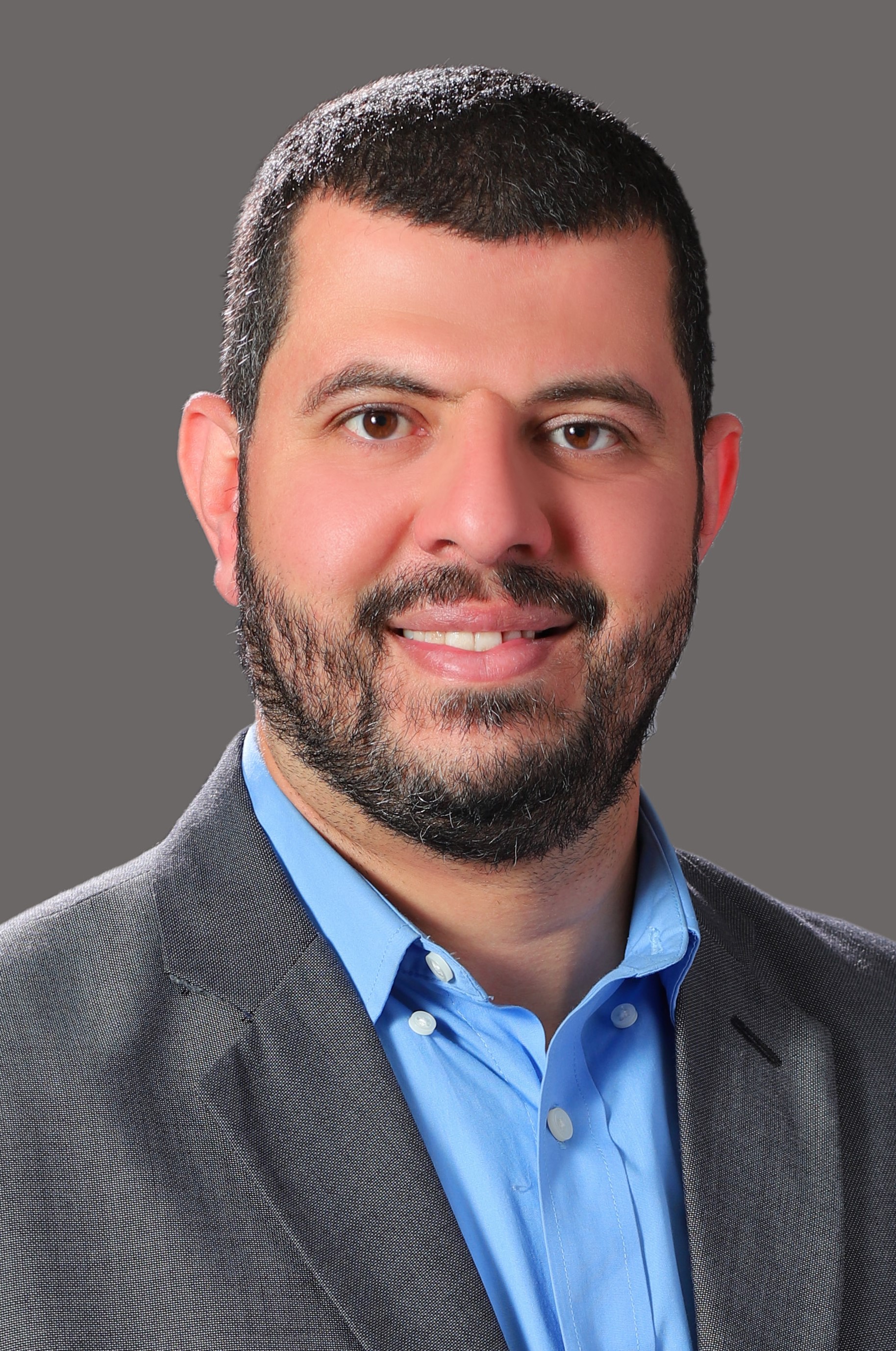
Dr. Alkhateeb earned his Bachelor's degree in Computer Science from the University of Jordan, Amman, Jordan, in 2004, and obtained his MSc and Ph.D. degrees in Computer Science from the University of Windsor, Canada, in 2011 and 2018, respectively. Before joining Lakehead University, he served as an Assistant Professor at Princess Sumaya University for Technology in Amman, Jordan, from 2021 to 2023. Prior to that, he held positions as an Assistant Professor and Mitacs Accelerate Postdoctoral Fellow at the University of Windsor, Canada.
He is currently serving as a faculty member at Lakehead University, where his research focuses on developing AI-driven models to predict health outcomes related to various cancers and mental health states. His work involves integrating heterogeneous health data using embedding techniques and applying machine and deep learning approaches for analysis and prediction.
Keynote Title: Evidence-Grounded Clinical Pharmacogenomics Question Answering System Using Large Language Models and Hybrid Retrieval Augmentation
Abstract
Pharmacogenomics (PGx) is vital for personalized medicine, but data complexity hinders clinical decision-making. We propose a clinical decision support framework combining large language models (LLMs) with hybrid retrieval-augmented generation (RAG) to improve PGx queries. This study evaluates Meta-LLaMA-3.1-8B-Instruct and Qwen3-8B across base configurations, LoRA fine-tuning, and hybrid RAG methods. A robust dataset was built by merging and normalizing CPIC data and ClinPGx guidelines. The retrieval pipeline pairs lexical filtering with dense semantic similarity, evaluated via automated metrics and manual clinical review. Results show that while Qwen is a strong baseline, LLaMA improves significantly with RAG and LoRA, yielding highly context-aware responses. Fine-tuning alone was insufficient, demonstrating that combining retrieval with parameter-efficient fine-tuning enhances LLM reliability for scalable clinical decision support.
Biography
Dr. T. Akilan (Ph.D., P.Eng., SMIEEE) is an Associate Professor in the Department of Software Engineering at Lakehead University. His research interests lie in computer vision, deep learning, image processing, and machine learning. His research group develops algorithms addressing challenges in pattern recognition, image segmentation, predictive modeling, and data analytics, with applications in intelligent transportation systems, healthcare, and precision agriculture.
In addition to research and development, Dr. Akilan is actively engaged in volunteer and leadership service. He serves as Director of Engineering Co-op and is a member of several internal committees at Lakehead University. He is also an active reviewer for several international journals and conferences, including IEEE Transactions on Intelligent Transportation Systems, IEEE Transactions on Image Processing, and IEEE Transactions on Pattern Analysis and Machine Intelligence. He serves as an Associate Editor for IEEE Transactions on Circuits and Systems for Video Technology and has reviewed grant applications for several national/international programs.
Keynote Title: Multimodal AI
Publishing Partner


Proceeding Publication
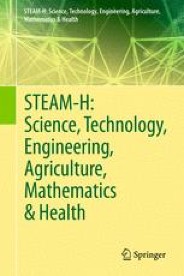
STEAM-H: Science, Technology, Engineering, Agriculture, Mathematics & Health
Abstracted and indexed in: SCOPUS, zbMATH
ISSN: 2520-193X | E-ISSN: 2520-1948